The Civil Rights Act of 1964: An End to Racial Segregation
Considered the most important U.S. civil rights law, the Civil Rights Act of 1964 was proposed by President John F. Kenn... MoreThe Civil Rights Act of 1964: An End to Racial Segregation
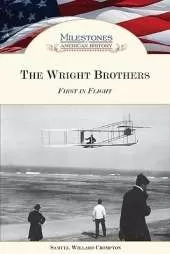
The Wright Brothers: First in Flight
In December 1903, Orville and Wilbur Wright made history by embarking on the first controlled airplane flight among the ... MoreThe Wright Brothers: First in Flight
The Monroe Doctrine: The Cornerstone of American Foreign Policy
In 1823, President James Monroe expressed his opinion to Congress that European powers should not be permitted to interf... MoreThe Monroe Doctrine: The Cornerstone of American Foreign Policy

The Transcontinental Railroad: The Gateway to the West
In May 1869, the U.S. railroad network unified when the Central Pacific and Union Pacific railroads came together in Pro... MoreThe Transcontinental Railroad: The Gateway to the West

The Stock Market Crash of 1929: The End of Prosperity
On October 29, 1929, more than 16 million stock shares were sold at the New York Stock Exchange, and by the end of Novem... MoreThe Stock Market Crash of 1929: The End of Prosperity

Sputnik/Explorer I
The cold war served as the backdrop of the competition to find out which superpower - the United States or the Soviet Un... MoreSputnik/Explorer I

The Attack on Pearl Harbor: The United States Enters World War II
When December 7, 1941, dawned in Hawaii, no one expected that by the end of the day, the U.S. Pacific Fleet would lie in... MoreThe Attack on Pearl Harbor: The United States Enters World War II
The Louisiana Purchase: Growth of a Nation
Though the present-day United States stretches from the Atlantic Ocean to the Pacific, the shape of the nation has shift... MoreThe Louisiana Purchase: Growth of a Nation

The California Gold Rush: Transforming the American West
In 1848, a carpenter found gold in a river in California. The news spread quickly, and soon prospectors from across the ... MoreThe California Gold Rush: Transforming the American West
The Outbreak of the Civil War: A Nation Tears Apart
On April 12, 1861, Confederate forces fired on federal troops stationed at Fort Sumter near Charleston, South Carolina. ... MoreThe Outbreak of the Civil War: A Nation Tears Apart

The Prohibition Era: Temperance in the United States
With the ratification of the Eighteenth Amendment to the Constitution in 1920, the United States became a 'dry' nation. ... MoreThe Prohibition Era: Temperance in the United States
Alexander Graham Bell and the Telephone: The Invention That Changed Communication
In 1876, Alexander Graham Bell uttered the words that would inaugurate a new era in human communication: 'Mr. Watson, co... MoreAlexander Graham Bell and the Telephone: The Invention That Changed Communication

The Alamo: The Battle for Texas
On February 23, 1836, general and dictator Antonio Lopez de Santa Anna and a Mexican force of more than 2,000 men launch... MoreThe Alamo: The Battle for Texas

The Erie Canal: Linking the Great Lakes
When it was completed in 1825, the Erie Canal caused a great sensation. Though plans for an artificial waterway to link ... MoreThe Erie Canal: Linking the Great Lakes

The Emancipation Proclamation: Ending Slavery in America
In 1863, during the Civil War that had torn the United States apart, President Abraham Lincoln signed the Emancipation P... MoreThe Emancipation Proclamation: Ending Slavery in America

Manifest Destiny: Westward Expansion
As the population of the 13 colonies grew and the economy developed, the desire to expand into new land increased. Ninet... MoreManifest Destiny: Westward Expansion