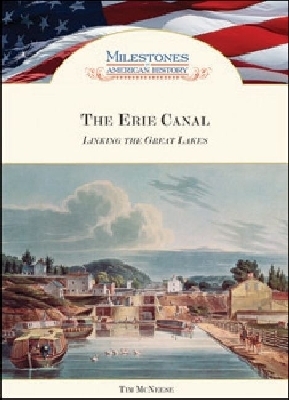
When it was completed in 1825, the Erie Canal caused a great sensation. Though plans for an artificial waterway to link the Great Lakes with the eastern seaboard were underway as early as 1783, supporters of the project experienced difficulties in finding federal funding. With New York State footing the bill, construction finally began on the canal on July 4, 1817, following the inauguration of DeWitt Clinton, the canal's biggest advocate, as governor of New York. The Erie Canal's completion brought an increase in goods and capital, making New York the leading financial and commercial center in the nation, surpassing Boston and Philadelphia. For many years, the Erie Canal served as the chief traffic artery for both passengers and freight, and population increased in large numbers throughout the state.However, the middle of 19th century brought steady competition from the railroads, and the canal's commercial importance was greatly reduced. Today, the Erie Canal is a branch of the New York State Canal System and is considered a relatively minor commercial waterway. In ""The Erie Canal"", read how this manmade waterway that extends from Lake Erie in Buffalo, New York, to the Hudson River in Albany helped shape the future of the Empire State.
This is Book 14 in the Milestones in American History Series. See all Milestones in American History books here.
See More Educational: History
No one has written a review for 'The Erie Canal: Linking the Great Lakes'
Why not be the first to share your opinion?
Tim McNeese is associate professor of history at York College in York, Nebraska. He earned an associate's degree from York College, a B.A. in history and political science from Harding University, and an M.A. in history from Missouri State University. A prolific author of books for elementary, middle and high school, and college readers, McNeese has publishe
More about Tim McNeese
 The second book in a fabulous new magical, middle-grade series filled with adventure, wonder and wildness,