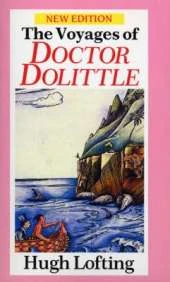
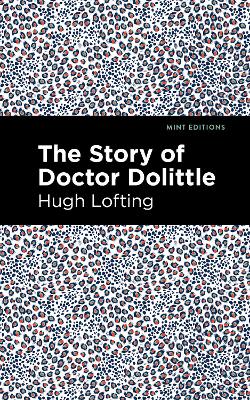
The Story of Doctor Dolittle (1920) is a children’s fantasy novel by Hugh Lofting. The novel is the first in a series of fifteen books featuring Doctor Dolittle, a character created by Lofting in letters written to his wife and children at home while he served in the Great War. Beloved by generations of adults and children for their imaginative and moral worldview, Lofting’s books have inspired numerous adaptations for theater, film, and television.
Doctor John Dolittle is an ordinary physician with an extraordinary gift. Struggling to maintain his clinic, which he runs at the house of his older sister, Dolittle turns his attention to caring for his vast collection of animals from around the world. When his parrot Polynesia teaches him how to speak with animals, however, his dwindling fortunes are reversed, and Dolittle establishes a successful veterinary clinic. As word of his skill reaches others, he is recruited for a voyage to Africa, where help is needed in order to cure an epidemic ravaging the monkey population. When a shipwreck leaves him stranded in a hostile kingdom, however, Doctor Dolittle needs the help of the very monkeys he has come to save in order to escape the clutches of Jolliginki’s king. Featuring pirates, crocodiles, and a magical creature known as a pushmi-pullyu, The Story of Doctor Dolittle is a delightful work of fantasy for children and adults alike.
With a beautifully designed cover and professionally typeset manuscript, this edition of Hugh Lofting’s The Story of Doctor Dolittle is a classic of English children’s fiction reimagined for modern readers.
This is Book 70 in the Mint Editions Series. See all Mint Editions books here.
No one has written a review for 'The Story of Doctor Dolittle'
Why not be the first to share your opinion?
Best known for his Doctor Dolittle books, Hugh Lofting (1886-1947) first had the idea for his unusual country doctor while writing to his children from the front during the First World War. The twelve books that followed are loved by children across the globe.
More about Hugh Lofting
 The second book in a fabulous new magical, middle-grade series filled with adventure, wonder and wildness,