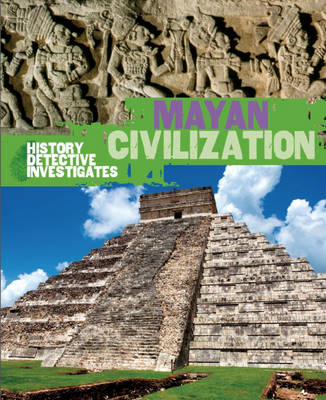
The early Mayans date back to 1800 BC however the golden age of Mayan civilization was around AD 250. They were the most dominant civilization of Mesopotamia covering what is now Guatemala, Belize and parts of Mexico. The Maya excelled at agriculture, pottery, hieroglyph writing, calendar-making and mathematics, and left behind an astonishing amount of impressive architecture and symbolic artwork. The Maya were most known for the cities they built, amassing over 40. Piazzas, palaces, temples and pyramids have been unearthed and courtyards for playing ball games. Farming communities lived outside the cities. Deeply religious, the Mayans worshipped various gods and the kings were claimed to be related to the gods. Mayan Civilization had declined in AD 900. No one is quite sure why but theories involve extensive war fare, depleted resources and a natural disaster which may have buried the cities in the lowlands. Contains maps, paintings, artefacts and photographs to show how the Mayans lived. Ideally suited for readers age 8+ or teachers who are looking for books to support the new curriculum for 2014.
If you enjoy reading about the Mayan Civilization then take a look at Ancient Greece, Ancient Sumer, Benin 900-1897 CE, The Shang Dynasty of Ancient China and Early Islamic Civilizations.
BOOK OF THE WEEK - Young readers will love this gorgeous picture book about a chilled capybara who just won't be rushed.
Can you solve the puzzles to save the Kingdom? Put your puzzle skills to the test with mazes, word games and codes to crack!
The second book in this popular series celebrating friendship, magic and fighting for what you believe in.
See More History & the past: general interest
No one has written a review for 'The History Detective Investigates: Mayan Civilization'
Why not be the first to share your opinion?
Clare Hibbert has written more than 60 information books for children. She lives in east London with her husband and two cats.
More about Clare Hibbert