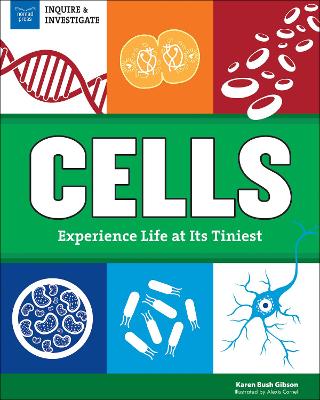
If you look at a piece of a leaf or a drop of saliva through a microscope, what do you see? Cells are the basic building blocks of life and they make up every living thing, from plants to animals, from humans to bacteria! In Cells: Experience Life at Its Tiniest, readers ages 12 to 15 investigate cells and learn how they affect our health, reproduction, criminal investigations, and agriculture. Through cell science, scientists have been able to create many things to help society, including seeds that grow better in certain locations, tools that can detect DNA at crime scenes, and immunizations to keep people healthy.
To reinforce learning and encourage investigation, hands-on activities include finding and identifying bacteria from pond water and human mouths and building models of different types of cells. Links to online primary sources, videos, and other relevant websites provide a digital learning component that appeals to this age group and promotes further, independent learning while strengthening practical connections to the material. Additional materials include a glossary and a list of current reference works, websites, and Internet resources.
This is Book 15 in the Inquire and Investigate Series. See all Inquire and Investigate books here.
See More Science & technology: general interest
See More Educational: Physics
See More Educational: Biology
No one has written a review for 'Cells: Experience Life at Its Tiniest'
Why not be the first to share your opinion?
Karen Bush Gibson is the author of more than 30 nonfiction books for children and a member of the Society of Children Book Writers and Illustrators. One of her books about women aviators was named a 2014 Notable Social Studies Trade Book for Young People by the NCSS and a selection in Air & Space/Smithsonian's Best Children's Books of 2013 roundup of aviatio
More about Karen Bush Gibson