'The brilliant and entertaining illustrations in this series enliven a clear and enjoyable text that should stimulate serious thought about the world and our place in it.' Lord Rees, Astronomer Royal, President of the Royal Society 2005-2010
Join Harriet, Darwin's pet tortoise, and Milton, Schrodinger's indecisive cat on a time-travelling quest of discovery, unravelling scientific exploration and religious beliefs and how they fit together.
Throughout the centuries humans have been looking for answers to BIG questions - how did the universe start? Is there a God behind it? Has science explained away the need for a God, or can faith enhance scientific discovery?
Harriet and Milton start their investigation with trying to discover when humans started asking these questions.
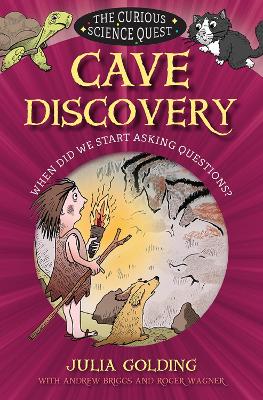
First stop on the quest is cave paintings - who did them? What did they mean, and what can they show us about our ancestors? Step into Harriet and Milton's time machine, bring some snacks, and enjoy this curious quest of discovery.
Written by Julia Golding, winner of the Waterstones Children's Book Prize 2006, and the Nestle Smarties Book Prize 2006.
This is Book 2 in the The Curious Science Quest Series. See all The Curious Science Quest books here.
See More History & the past: general interest
See More Science & technology: general interest
See More Art: general interest
No one has written a review for 'Cave Discovery: When did we start asking questions?'
Why not be the first to share your opinion?
Julia Golding is a multi-award winning writer for adults and young adults, including the Cat Royal series. Former British diplomat and Oxfam policy adviser, she has now published over fifty books in genres ranging from historical adventure to fantasy. She has a doctorate in English literature from Oxford. Lion Children's is thrilled to publish The Curious Sc
More about Andrew BriggsJulia Golding read English at Cambridge then joined the Foreign Office and served in Poland. Her work as a diplomat took her from the high point of town twinning in the Tatra Mountains to the low of inspecting the bottom of a Silesian coal mine. On leaving Poland, she exchanged diplomacy for academia and took a doctorate in the literature of the English Roma
More about Julia Golding
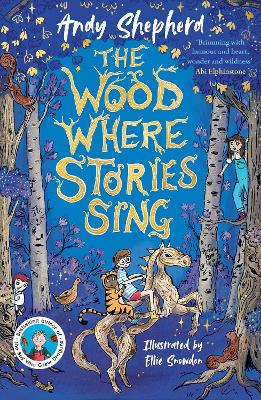 The second book in a fabulous new magical, middle-grade series filled with adventure, wonder and wildness,