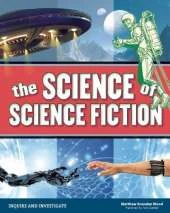
Early science fiction imagined a world with space travel, video calls, and worldwide access to information, things we now know as NASA's human spaceflight program, Skype, and the Internet. What next? Could we really bring back the dinosaurs, travel to a distant star, or live on Mars? In The Science of Science Fiction, readers ages 12 to 15 explore the science behind classic and modern science fiction stories, including artificial intelligence, androids, and the search for alien life. They learn how cutting edge concepts, including time dilation and genetic manipulation, influence today's fiction. The Science of Science Fiction promotes critical thinking skills through inquiry, discovery, research, analysis, and reflection of key scientific ideas and concepts made popular by many titles in science fiction. Each chapter features informative sidebars and video and website links for an in-depth look at key topics. Science-minded experiments include a simple demonstration of artificial gravity using a bucket of water and calculating the speed of light using chocolate in a microwave. This variety of resources ensures the material is accessible to students with diverse learning styles.
This is Book 13 in the Inquire and Investigate Series. See all Inquire and Investigate books here.
No one has written a review for 'The Science of Science Fiction'
Why not be the first to share your opinion?
Matthew Brenden Wood, author of The Science of Science Fiction , is a math and science teacher with a passion for STEAM education. He is also an avid amateur astronomer and astrophotographer. Wood holds a bachelor's degree in astronomy from the University of Massachusetts at Amherst and lives in Phoenix, Arizona. Sam Carbaugh has illustrated seve
More about Matthew Brenden Wood


 The second book in a fabulous new magical, middle-grade series filled with adventure, wonder and wildness,