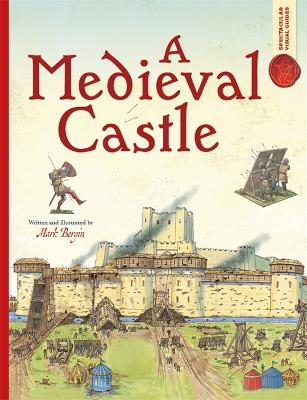
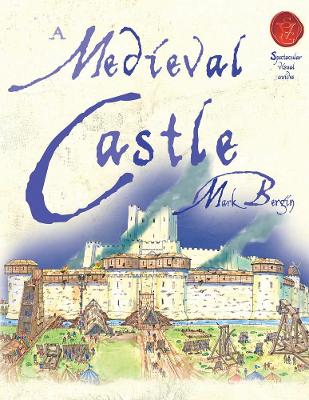
A Medieval Castle examines the architectural achievements and hidden secrets held within the walls of some of history's greatest fortifications.
Explore the motives behind medieval castle building in this informative visual guide to the most fascinating fortresses in history! Consider what problems the castle might face in conflicts, such as siege warfare and bombardment, as well as the many defences used to fight off invaders, including the daunting portcullis and dark dungeons. This book also gives an insight into the various different people needed to make castle life run smoothly, and their day-to-day responsibilities.
With superb cutaway illustrations and pinpoint enlargements to accompany the text, this book is the perfect gift for history enthusiasts eager to learn more about the development of forts and strongholds from the beginning of the Middle Ages. Informative captions, maps, a complete glossary and an index make this title an ideal educational text for children studying the kings, queens and period in history.
BOOK OF THE WEEK - Young readers will love this gorgeous picture book about a chilled capybara who just won't be rushed.
Can you solve the puzzles to save the Kingdom? Put your puzzle skills to the test with mazes, word games and codes to crack!
The second book in this popular series celebrating friendship, magic and fighting for what you believe in.
This is Book 4 in the Spectacular Visual Guides Series. See all Spectacular Visual Guides books here.
See More History & the past: general interest
See More Warfare, battles, armed forces
See More People & places
No one has written a review for 'Spectacular Visual Guides: A Medieval Castle'
Why not be the first to share your opinion?
Mark Bergin was born in Hastings, England. He has written over twenty books, including It's Fun to Draw Farm Animals and It's Fun to Draw Safari Animals . He has done many book designs, layouts, and storyboards in many styles, including cartoons for numerous books, posters, and advertisements. He lives with his wife and three
More about Mark BerginMark Bergin was born in Hastings, England. He has written over twenty books, including It's Fun to Draw Farm Animals and It's Fun to Draw Safari Animals . He has done many book designs, layouts, and storyboards in many styles, including cartoons for numerous books, posters, and advertisements. He lives with his wife and three
More about Mark Bergin