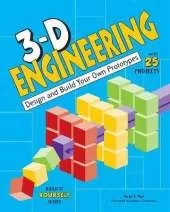
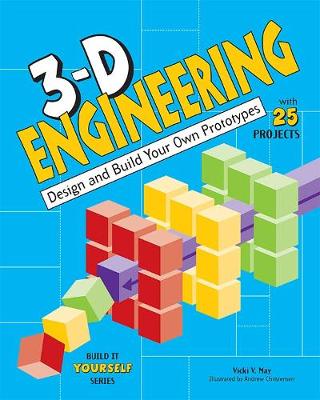
How did somebody come up with the idea for bridges, skyscrapers, helicopters, and nightlights? How did people figure out how to build them? In 3D Engineering: Design and Build Your Own Prototypes, young readers tackle real-life engineering problems by figuring out real-life solutions. Kids apply science and math skills to create prototypes for bridges, instruments, alarms, and more. Prototypes are preliminary models used by engineers--and kids--to evaluate ideas and to better understand how things work. Engineering design starts with an idea. How do we get to the other side of the river? How do we travel long distances in short periods of time? Using a structured engineering design process, kids learn how to brainstorm, build a prototype, test a prototype, evaluate, and re-design. Projects include designing a cardboard chair to understand the stiffness of structural systems and designing and building a set of pan pipes to experiment with pitch and volume. Creating prototypes is a key step in the engineering design process and prototyping early in the design process generally results in better processes and products.
3D Engineering gives kids a chance to figure out many different prototypes, empowering them to discover the mechanics of the world we know.
This is Book 58 in the Build it Yourself Series. See all Build it Yourself books here.
No one has written a review for '3-D Engineering: Design and Build Practical Prototypes'
Why not be the first to share your opinion?
Vicki V. May holds a BS in engineering from the University of Minnesota and MS and PhD degrees in engineering from Stanford University. She is a professor at the Thayer School of Engineering at Dartmouth College and is also involved in various outreach projects that bring the challenge of engineering to middle and high school students. Vicki was named Teache
More about Vicki V. May
 The second book in a fabulous new magical, middle-grade series filled with adventure, wonder and wildness,