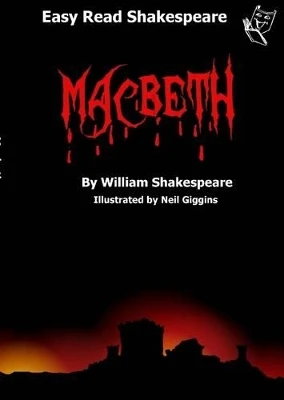
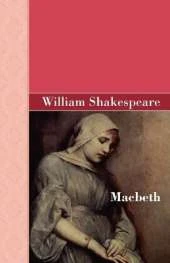
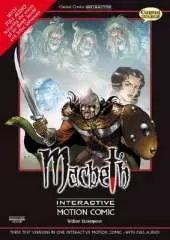
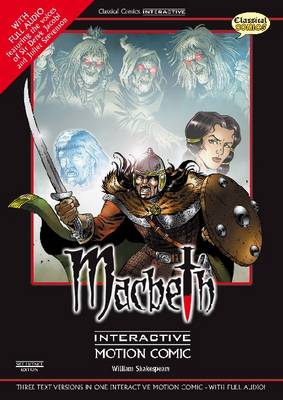
This is the site licence edition. An easy-to-use, flexible and engaging teaching resource for secondary students of mixed abilities studying "Macbeth". An exciting interactive experience to work in classrooms alongside Classical Comics award-winning differentiated graphic novels to show students and the most reluctant readers that studying Shakespeare doesn't have to be "boring". Designed to be used in a multitude of ways to fit in with many different teaching styles and to promote literacy in a differing caliber of pupils in the same classroom, Macbeth Interactive Motion Comic offers a choice of three language options: Original Text (original Shakespeare with context notes), Plain Text (plain modern English) or Quick Text (reduced dialogue) - all using the same animated artwork giving you a classroom of pupils, of whatever ability, effectively reading from the 'same' page. There is also an option to view "No Text" (empty speech balloons for pupils to fill in the dialogue!).
Teachers retain full control over playback of the motion comic choosing to use it on their whiteboard or computer, or it can be used simultaneously by any number of computers that are connected to the school network. (It can even be remotely accessed on an extended network so pupils can access it from home). Interacting with the motion comic is really versatile.
Choose to: watch the whole "movie" (even switching between text versions as you go if desired) pause to hover over highlighted words to receive helpful context notes jump back to the dramatis personae for a reminder of the characters list select to watch just certain scenes choose panel by panel navigation (then select at what point in the panel you'd like to play the animation - fast forward, rewind, pause, resume, return to start of the panel or skip to the end) watch the animation on split screen watch with or without sound Macbeth Interactive Motion Comic has everything: animation of the graphic novel artwork, full audio, sound effects, and if that wasn't enough, the audio is voiced by leading professional actors, including the voice talents of Juliet Stevenson as Lady Macbeth, and for the lead role in Original Text, Sir Derek Jacobi. Macbeth Interactive Motion Comic can be used with or without the corresponding Classical Comics printed graphic novels, as the Act/Line/Scene references throughout the animation link back to any traditional Macbeth script.
All three versions of the animated Classical Comics graphic novels in one application Full audio soundtrack Context notes accompany the Original Text version Links to the Classical Comics graphic novels Act/Scene/Line references to link with any traditional script Choose "Movie Mode" to watch the experience unfold, choose panel-by-panel navigation or select particular scenes Runs on any PC (Windows XP SP2 or later) or Mac (OSX 10.4.11 or later) or on any web browser that can run Adobe Flash Site Licence Edition extras: - Can be used on multiple machines at one time - Includes additional set of Low Audio animation for lower bandwidth - Includes electronic set of No Text pages (with empty speech balloons)
See More School editions of Shakespeare
No one has written a review for 'Macbeth Interactive Motion Comic: Site Licence Edition'
Why not be the first to share your opinion?
William Shakespeare was born in Stratford-upon-Avon in Warwickshire, and was baptised on 26 April 1564. His father was a glove maker and wool merchant and his mother, Mary Arden, was the daughter of a well-to-do local land owner. Shakespeare was probably educated in Stratford's grammar school. In 1582 he married Anne Hathaway, and the couple had a daughter t
More about William ShakespeareMike W. Barr, American comic books writer, is a regular contributor to both DC and Marvel. Gary Erskine has worked on a dizzying array of titles, both as a penciller and inker, including Star Wars, Judge Dredd, The Filth, The Lords of Misrule and War Story.
More about Gary ErskineWilliam Shakespeare is one of the most widely read authors and possibly the best dramatist ever to live. The actual date of his birth is not known but, traditionally, April 23 1564, has been his accepted birthday (St George's Day). He died on the same date in 1616, aged 52.The life of William Shakespeare can be divided into three acts. The first 20 years of
More about Nigel Dobbyn
 The second book in a fabulous new magical, middle-grade series filled with adventure, wonder and wildness,