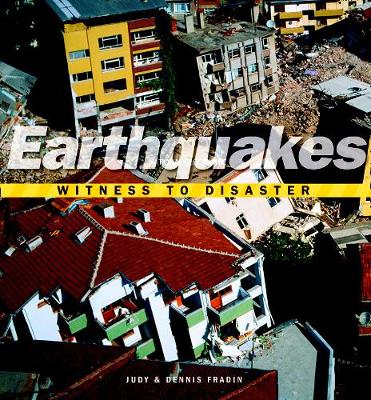
It's another normal day in Alaska, where the beauty of the rugged landscape makes the hardships of winter worth enduring. This Northern life is good, you think, when suddenly-without warning-your world is ROCKED! The ground sways beneath your feet with sickening force. You've just been caught in the second strongest earthquake in history!
Witness to Disaster: Earthquakes uses eyewitness accounts and pulse-racing narrative to bring readers into the terrifying heart of an earthquake. The first chapter documents the 1964 Alaskan quake that shook Prince William Sound with a 9.2 magnitude force, and set off a tsunami that ultimately caused most of the deaths attributed to this frightening act of nature. The following chapters explore the deadly history of earthquakes and the seismic and geological science of this phenomenon. Readers learn how and why earthquakes occur, and what scientists can do to prevent casualties. The expansive back matter includes a list of sources to discover more about these fearsome catastrophes.
National Geographic supports K-12 educators with ELA Common Core Resources.
Visit www.natgeoed.org/commoncore for more information.
This is Book 4 in the Witness to Disaster Series. See all Witness to Disaster books here.
See More Natural history
No one has written a review for 'Witness to Disaster: Earthquakes'
Why not be the first to share your opinion?
The National Geographic Kid is curious about the world around them, empowered in the face of challenges and responsible for others and the natural world. Combining these principles with the international educational heritage of Collins, this partnership is a natural fit for books that are funny, weird, exploratory, educational and loved by children.
More about Judy FradinThe National Geographic Kid is curious about the world around them, empowered in the face of challenges and responsible for others and the natural world. Combining these principles with the international educational heritage of Collins, this partnership is a natural fit for books that are funny, weird, exploratory, educational and loved by children.
More about National Geographic Kids
 The second book in a fabulous new magical, middle-grade series filled with adventure, wonder and wildness,