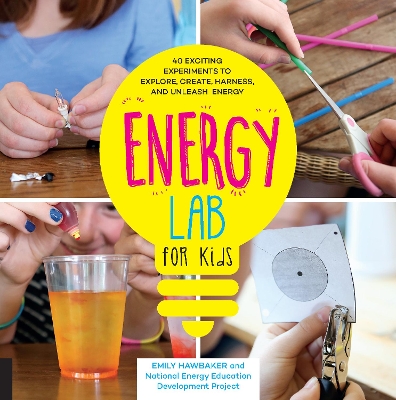
Energy Lab for Kids offers 40 discovery-filled and thought-provoking energy projects by Emily Hawbaker, a science educator from the NEED (National Energy Education Development) project—with a foreword by Liz Lee Heinecke, author of Kitchen Science Lab for Kids. Using supplies that you can find around the house or in the grocery store, these exciting projects let you observe, explore, discover, and get energized!
We hear about energy on the news, we use it every day, and sometimes we're told we have too much of it. But what is energy—potential, kinetic, chemical, radiant, and thermal? The lab activities in this book will let you explore almost everything about energy—what it is, how we find it, how we use it, and how we can save it.
Uniting this collection of science experiments for the kitchen, backyard, or classroom is the goal to explore and discover real energy solutions. The chapters cross all categories—from steam, electricity, and chemical reactions, to water, solar, and wind power—allowing kids to compare and test the different sources and to discover their strengths and failings. Why is one source of energy is more efficient for a one situation but not for another? Why might two energy sources combined work better than a single source? Which sources are renewable? Projects are geared to understanding actual issues in the news today. With an emphasis on inventive exploration, you'll discover that creativity leads to breakthroughs.
Learn about:
This is Book 11 in the Lab for Kids Series. See all Lab for Kids books here.
No one has written a review for 'Energy Lab for Kids: 40 Exciting Experiments to Explore, Create, Harness, and Unleash Energy'
Why not be the first to share your opinion?
Emily Hawbaker has always had energy and a passion for science and education. After graduating from Pennsylvania State University with a degree in Earth science and a minor in science education, she began teaching eighth grade science. Her school was chosen to take part in an energy education project where students learn about their energy use and then
More about Emily Hawbaker
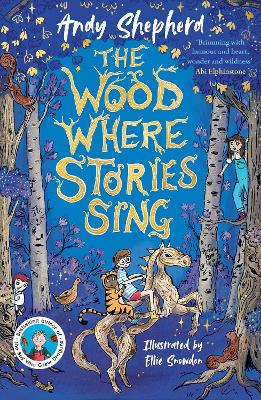 The second book in a fabulous new magical, middle-grade series filled with adventure, wonder and wildness,