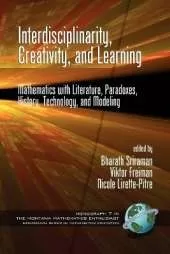
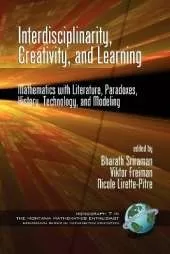
Interdisciplinarity is increasingly viewed as a necessary ingredient in the training of future oriented 21st century disciplines that rely on both analytic and synthetic abilities across disciplines. Nearly every curricular document or vision statement of schools and universities include a call for promoting creativity in students. Yet the construct of creativity and giftedness across disciplines remains elusive in the sense that the prototypical examples of such work come from eminent scientists, artists and mathematicians, and little if any work has been conducted with non-eminent individuals. This monograph is an attempt to fill this gap by putting forth the view that interdisciplinarity and creativity are related constructs, and that the cultivation of domain general creativity is possible. Mathematics has historically been anchored to numerous disciplines like theology, natural philosophy, culture and art, allowing for a flexibility of thought that is difficult to cultivate in other disciplines. In this monograph, the numerous chapters from Australia, U.S.A., Canada, Cyprus, Denmark and Japan provide a compelling illustration of the intricate connection of mathematics with literature, paradoxes, history, technology and modeling, thus serving as a conduit for interdisciplinarity, creativity and learning to occur.
This is Book 6 in the The Montana Mathematics Enthusiast Series. See all The Montana Mathematics Enthusiast books here.
See More Educational: Mathematics & numeracy
No one has written a review for 'Interdisciplinarity, Creativity, and Learning: Mathematics with Literature, Paradoxes, History, Technology, and Modeling'
Why not be the first to share your opinion?