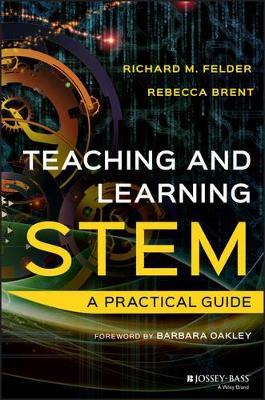
Rethink traditional teaching methods to improve student learning and retention in STEM Educational research has repeatedly shown that compared to traditional teacher-centered instruction, certain learner-centered methods lead to improved learning outcomes, greater development of critical high-level skills, and increased retention in science, technology, engineering, and mathematics (STEM) disciplines. Teaching and Learning STEM presents a trove of practical research-based strategies for designing and teaching STEM courses at the university, community college, and high school levels. The book draws on the authors' extensive backgrounds and decades of experience in STEM education and faculty development. Its engaging and well-illustrated descriptions will equip you to implement the strategies in your courses and to deal effectively with problems (including student resistance) that might occur in the implementation. The book will help you:
No one has written a review for 'Teaching and Learning STEM: A Practical Guide'
Why not be the first to share your opinion?
RICHARD M. FELDER, PD, is Hoechst Celanese Professor Emeritus of Chemical Engineering at North Carolina State University and author of the bestselling Wiley textbook Elementary Principles of Chemical Processes, now in its fourth edition. He is the inaugural recipient of the Lifetime Achievement Award in Engineering Education, presented in 2012 by the America
More about Richard M. FelderRICHARD M. FELDER, PD, is Hoechst Celanese Professor Emeritus of Chemical Engineering at North Carolina State University and author of the bestselling Wiley textbook Elementary Principles of Chemical Processes, now in its fourth edition. He is the inaugural recipient of the Lifetime Achievement Award in Engineering Education, presented in 2012 by the America
More about Rebecca Brent
 The second book in a fabulous new magical, middle-grade series filled with adventure, wonder and wildness,