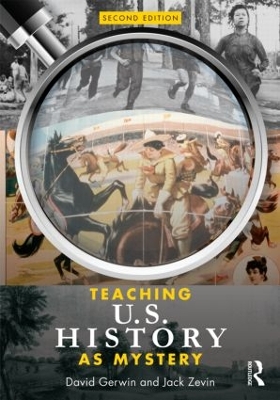
Presenting U.S. history as contested interpretations of compelling problems, this text offers a clear set of principles and strategies, together with case studies and "Mystery Packets" of documentary materials from key periods in American history, that teachers can use with their students to promote and sustain problem-finding and problem-solving in history and social studies classrooms. Structured to encourage new attitudes toward history as hands-on inquiry, conflicting interpretation, and myriad uncertainties, the whole point is to create a user-friendly way of teaching history "as it really is" ─ with all its problems, issues, unknowns, and value clashes. Students and teachers are invited to think anew as active participants in learning history rather than as passive sponges soaking up pre-arranged and often misrepresented people and events. New in the Second Edition: New chapters on Moundbuilders, and the Origins of Slavery; expanded Gulf of Tonkin chapter now covering the Vietnam and Iraq wars; teaching tips in this edition draw on years of teacher experience in using mysteries in their classrooms.
See More Educational: History
No one has written a review for 'Teaching U.S. History as Mystery'
Why not be the first to share your opinion?
David Gerwin is an associate professor of Social Studies Education at Queens College, City University of New York. A former high school history teacher and history professor, he has sought out endeavors that combine historical scholarship and teacher professional development, including collaborations with the American Social History Project, Working Films, a
More about David GerwinJack Zevin began as a history and geography teacher on the south side of Chicago, moving to U. of Michigan for his doctorate. After settling at Queens College/CUNY in New York as a professor of education, he has remained in place ever since producing many books and articles that range across history, geography and the social sciences. He has conducted NSF in
More about Jack Zevin