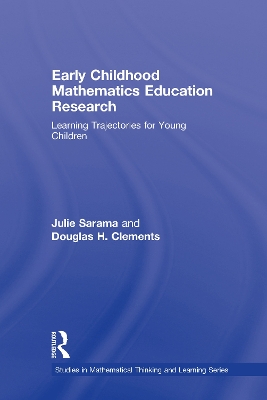
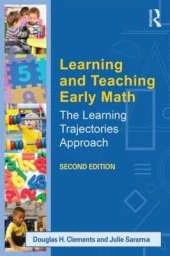
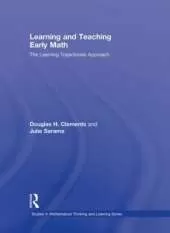
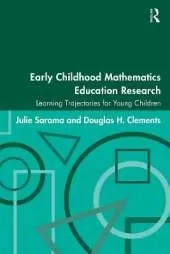
This important new book synthesizes relevant research on the learning of mathematics from birth into the primary grades from the full range of these complementary perspectives. At the core of early math experts Julie Sarama and Douglas Clements's theoretical and empirical frameworks are learning trajectories—detailed descriptions of children’s thinking as they learn to achieve specific goals in a mathematical domain, alongside a related set of instructional tasks designed to engender those mental processes and move children through a developmental progression of levels of thinking. Rooted in basic issues of thinking, learning, and teaching, this groundbreaking body of research illuminates foundational topics on the learning of mathematics with practical and theoretical implications for all ages. Those implications are especially important in addressing equity concerns, as understanding the level of thinking of the class and the individuals within it, is key in serving the needs of all children.
This is Book 14 in the Studies in Mathematical Thinking and Learning Series Series. See all Studies in Mathematical Thinking and Learning Series books here.
See More Educational: Mathematics & numeracy
No one has written a review for 'Early Childhood Mathematics Education Research: Learning Trajectories for Young Children'
Why not be the first to share your opinion?
Julie A. Sarama is an Associate Professor of Mathematics Education at the University at Buffalo, State University of New York.
Douglas H. Clements is Distinguished Professor of Early Childhood, Mathematics, and Computer Education at the University at Buffalo, State University of New York.
Douglas H. Clements is the Kennedy Endowed Chair in Early Childhood Learning, Executive Director of the Marsico Institute of Early Learning and Literacy, and Professor at the University of Denver, USA.
Julie Sarama is the Kennedy Endowed Chair in Innovative Learning Technologies and Professor at the University of Denver, USA.