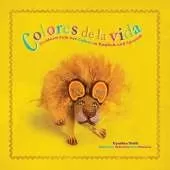
Little kids love colors, they love animals, and they love the sounds of words. Especially new words. Colores de la Vida--the third in the highly successful series First Concepts in Mexican Folk Art--combines all these elements to teach early learners about color. Leggy red giraffes, pink cows, purple rabbits--the Oaxacan folk artists who contributed to this book unleashed their imaginations and went wild with color. Young children will delight in the bright colors of the Oaxacan rainbow while folk art collectors will marvel at the whimsical handcrafts. But the simplicity of a book like Colores de la Vida belies the years of research and thoughtful intercultural communication with third-world artists done by Cynthia Weill. As an art historian, she has always been interested in the crafts of developing nations. Weill's intention with Colores de la Vida--and its predecessors in the series, ABeCedarios and Opuestos--has been to find an educational purpose for the work of Oaxacan artisans. She hopes to open up a larger, more international market for their craft. Cynthia Weill is a professor and mentor to teachers at Columbia University's Teachers College.
She also owns a business--Aid to Women Artisans--that promotes the craftwork of artisans from developing countries. Colores de la Vida is her third book in the First Concepts in Mexican Folk Art series.
This is Book 3 in the First Concepts in Mexican Folk Art Series. See all First Concepts in Mexican Folk Art books here.
See More Picture books
No one has written a review for 'Colores de la Vida: Mexican Folk Art Colors in English and Spanish'
Why not be the first to share your opinion?
Cynthia Weill holds a doctorate in education from Teachers College Columbia University. She is on the board of a foundation -- Friends of Oaxacan Folk Art -- that seeks to promote and preserve the artists and artisanal work of the state. Familia is her fifth book that features the folk art of Oaxaca.
Jesus Canseco Zarate
More about Cynthia Weill