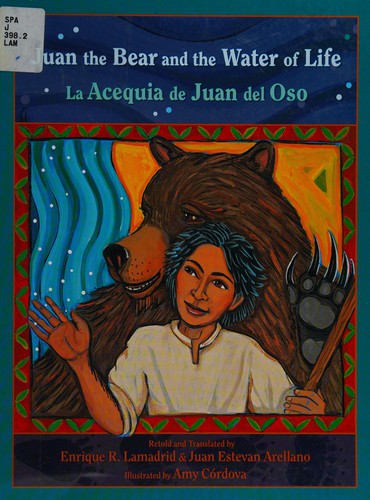
La Acequia del Rito y la Sierra in the Mora Valley is the highest and most famous traditional irrigation system in New Mexico. It carries water up and over a mountain ridge and across a sub-continental divide, from the tributaries of the Rio Grande to the immense watershed of the Mora, Canadian, Arkansas, and Mississippi Rivers. The names and stories of those who created this acequia to sustain their communities have mostly been lost and replaced by myths and legends. Now, when children ask, some parents attribute the task of moving mountains and changing the course of rivers to Juan del Oso, the stouthearted man whose father was a bear.From the mountains of northern Spain to the Andes in South America, Spanish-speaking people have told ancient legends of Juan del Oso and his friends. In this children's tale, agriculturalist Juan Estevan Arellano and folklorist Enrique Lamadrid share a unique version of a celebrated story that has been told in northern New Mexico for centuries.
This is Book 1 in the Paso Por Aqui Series on the Nuevomexicano Literary Heritage Series. See all Paso Por Aqui Series on the Nuevomexicano Literary Heritage books here.
See More Traditional stories
No one has written a review for 'Juan the Bear and the Water of Life: La Acequia de Juan del Oso'
Why not be the first to share your opinion?
Enrique R. Lamadrid is a literary folklorist and cultural historian in the University of New Mexico's Department of Spanish and Portuguese. In 2005, he was awarded the Americo Paredes Prize by the American Folklore Society in recognition of his work as a cultural activist.|Amy Cordova of Taos, New Mexico, is an artist, arts educator, and activist, renowned f
More about Enrique R. LamadridRudolfo Anaya, widely acclaimed as one of the founders of modern Chicano literature, is professor emeritus of English at the University of New Mexico. He is best known for the classic Bless Me Ultima .||Amy Cordova of Taos, New Mexico, is an artist, arts educator, and activist, renowned for her highly contextualized depictions of Latino cultures. S
More about Amy Cordova