Reader Q&A with Jacqueline Wilson
Your stories always have a modern feel to them, and my friends and I can really relate to them. How do you keep up-to-date with how children feel and modern situations?
I try my hardest! I chat to children when I do signings, and read all my fan mail carefully, and do my best. It would be brilliant if my daughter would provide me with grandchildren but that hasn’t happened yet.
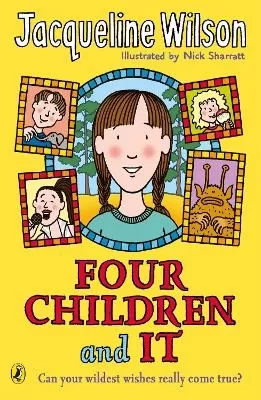
I adored The Railway Children and Five Children and It by E.Nesbit. What do you think E. Nesbit would think of your writing?
I adore them too – they were favourite books when I was young. I don’t think Edith would mind too much that those two books inspired my own modern versions. She occasionally used other writers’ themes and ideas herself!
Do you know Nesbit has a road named after her? What would you like named after you? We think there should be a book award like the Wilson Award created for young writers and you could judge it and give a prize.
My partner loves gardening and they would absolutely love to have a rose named after me. Or a dahlia or a daffodil, they’re not fussy! I like the sound of a Wilson Award, but I don’t really like judging stories. I always feel so sorry for the ones who don’t win.
Which three people (from the past or present) would you like to have dinner with?
I’d like to have a Victorian dinner with Charlotte Bronte, Charles Dickens, and Dante Gabriel Rossetti. We’d talk art and literature and discuss pets. Charlotte’s sister Emily had a fierce dog called Keeper, Dickens had various dogs, and Rossetti had a wombat! I have two dogs, a cat, and four chickens. The gentlemen would be very jolly together, but Miss Bronte might be a little shy and reserved, though I’m sure she could hold her own in a discussion.
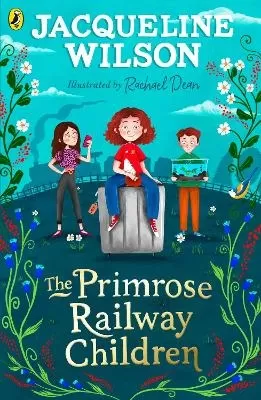
I think Phoebe in The Primrose Railway Children is brave, confident and stands up for her family. Are messages and morals important in your books?
I don’t deliberately put them in, but I suppose they creep into the text here and there.
Which of your books are you most proud of and which character would you like to meet in real life, if you could?
I think I’m proudest of the book Hetty Feather. I’d certainly love to meet Hetty, as she’s so spirited and determined, and she’d be able to tell me exactly what it’s like to live in Victorian times.
Which book are you reading at the moment and do you have any book recommendations?
I’m reading Bleak House which is marvellous but very l-o-n-g. When I was eleven my favourite books were I Capture the Castle by Dodie Smith and The Greengage Summer by Rumer Godden.
If you hadn’t become an author what job would you have had?
I’d have loved my own bookshop. I wouldn’t necessarily have the children’s section divided by age. I’d have themes, so Peter Rabbit and Little Grey Rabbit and The Blue Velvet Rabbit would nestle up to Watership Down and a handbook on owning a rabbit as a pet.
Do you get much spare time and if you do what do you do to relax?
I do a lot of writing and do lots of speaking events too – but I love to read, to take my dogs for a walk, and I swim, I see my friends, and settle down with a box set in the evening.
Do you have any hidden talents or skills?
I used to be quite good at dancing. And I have an uncanny knack of knowing what the time is without glancing at my watch.
What tips do you have for children who like to read and dream of writing a book or working with books when they are older?
I would read as many books as you can now – and perhaps keep a diary to get into a regular writing habit even when you don’t feel like it!
What advice would you give to an 11 year old about to start secondary school (that is me and my class by the way)?
Don’t forget that everyone will be feeling a bit shy and nervous, even the really cool students. I’m sure secondary school will be fun and a chance to learn all sorts of different interesting subjects and make some new friends. I met one of my best friends that first day at secondary school.
What are the best and worst parts of being a famous author?
The best part is becoming totally immersed in your own imaginary world. The worst part is when you get stuck. It’s great to do talks and interviews about your books – and a delight to answer really interesting questions like yours. Thank you, C!