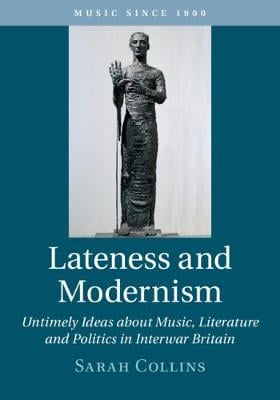
In the aftermath of World War I, a sense of impasse and thwarted promise shaped the political and cultural spheres in Britain. Writers such as D. H. Lawrence, Hilda Doolittle, T. S. Eliot and Wyndham Lewis were among the literary figures who responded by pursuing vividness, autonomy and impersonality in their work. Yet the extent to which these practices were reflected in ideas about music from within the same milieu has remained unrecognised. Uncovering the work of composer-critics who worked alongside these figures - including Philip Heseltine (Peter Warlock), Cecil Gray and Kaikhosru Sorabji - Sarah Collins traces the shared tendencies of literary and musical modernisms in interwar Britain. Collins explores the political investments underpinning these tendencies, as well as the influence of English Nietzscheanism and related intellectual currents, arguing that a particular conception of the self, history, and the public characterised an ethos of 'lateness' within this milieu.
See More Educational: English literature
No one has written a review for 'Music since 1900 Lateness and Modernism'
Why not be the first to share your opinion?
Sarah Collins is a lecturer in musicology at the University of Western Australia. She is the author of The Aesthetic Life of Cyril Scott (2013); and editor of Music and Victorian Liberalism (Cambridge, forthcoming).
More about Sarah Collins
 The second book in a fabulous new magical, middle-grade series filled with adventure, wonder and wildness,