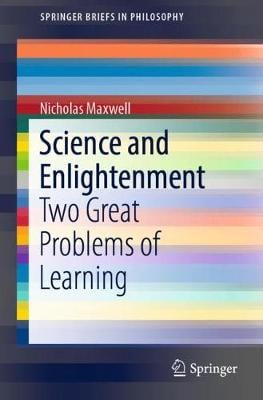
This book describes two great problems of learning that confront humanity: learning about the nature of the universe and about ourselves and other living things as a part of it, and learning how to become civilized. The author proposes that with the creation of modern science in the 17th century, the first problem was essentially solved. However, the Enlightenment of the 18th century blundered, and this defective version, inherited from the past, is still built into academia. The book describes a new Enlightenment, in which the current dominance of Knowledge-Inquiry progresses toward what the author terms Wisdom-Inquiry. The book discusses how wisdom-inquiry would help, and addresses questions and objections engendered by the new Enlightenment. This approach, argues the author, would allow us to succeed where the Enlightenment failed: to learn from scientific progress how to make social progress towards the best possible world. Science and Enlightenment: Two Great Problems of Learning will interest a broad audience, ranging from academics, university students and teachers; journalists, politicians and general readers concerned about global problems and the fate of the world.
This is Book 2 in the SpringerBriefs in Philosophy Series. See all SpringerBriefs in Philosophy books here.
No one has written a review for 'Science and Enlightenment: Two Great Problems of Learning'
Why not be the first to share your opinion?
Nicholas Maxwell has devoted much of his working life to arguing that we need to bring about a revolution in academia so that it seeks and promotes wisdom and does not just acquire knowledge. He has published a number of books on this theme, including What's Wrong With Science? (Bran's Head Books, 1976), From Knowledge to Wisd
More about Nicholas Maxwell
 The second book in a fabulous new magical, middle-grade series filled with adventure, wonder and wildness,