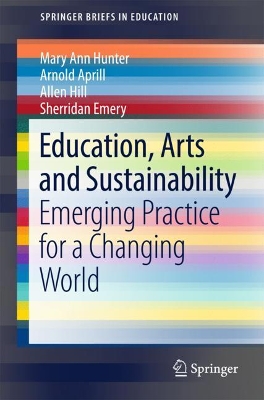
This book addresses this challenge by proposing an integration of sustainability and arts education in both principle and practice. In a global context of intensifying social, economic and environmental crises, education is key to raising awareness and motivating individuals and communities to act in sustaining life in our more-than-human world. But how is this done when the complexity and need for change becomes overwhelming, and schooling systems become complicit in supporting the status quo?
Drawing on critical education theory and precepts of creativity, curiosity and change, it documents a series of case examples that demonstrate how five principles of Education for Sustainability - critical thinking, systems thinking, community partnership, participation, and envisioning better futures - are found at the heart of much arts practice in schools. Featuring the creative work and voices of teachers working in arts-based enquiry and diverse community-engaged contexts, the book investigates how sustainability principles are embedded in contemporary arts education thinking and pedagogy. The authors are unapologetically optimistic in forming an alliance of arts and sustainability education as a creative response to the challenge of our times, arguing that while they may have operated on the margins of conventional pedagogy and curriculum, they have more than marginal impact.
This is Book 9 in the SpringerBriefs in Education Series. See all SpringerBriefs in Education books here.
No one has written a review for 'Education, Arts and Sustainability: Emerging Practice for a Changing World'
Why not be the first to share your opinion?
Mary Ann Hunter is Senior Lecturer in Arts Education at the University of Tasmania where she researches in the fields of arts education and peace building. She coordinated the Curious Schools project with Sherridan Emery and has current interests in artist pedagogies and the role of curiosity in educational and applied arts encounters. Mary Ann has wor
More about Mary Ann HunterMary Ann Hunter is Senior Lecturer in Arts Education at the University of Tasmania where she researches in the fields of arts education and peace building. She coordinated the Curious Schools project with Sherridan Emery and has current interests in artist pedagogies and the role of curiosity in educational and applied arts encounters. Mary Ann has wor
More about Arnold Aprill
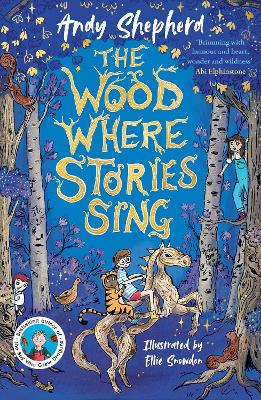 The second book in a fabulous new magical, middle-grade series filled with adventure, wonder and wildness,