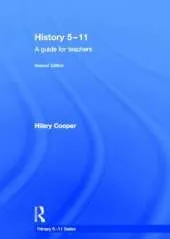
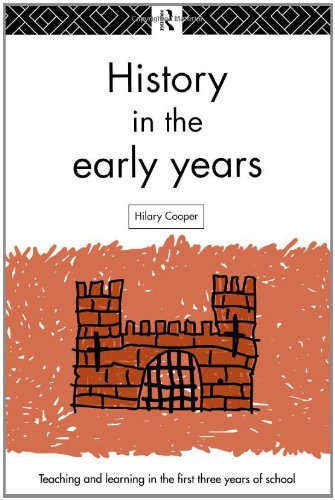
Until recently, history was sometimes seen as being inapprop riate for young children. Increasingly, however, teachers are discovering that children enjoy finding out about the past, and that teaching history can be an integral part of good practice. Parts 1 and 2 of the book explore the context for teaching history in the early years, including sections on *understanding change over time *interpretations of the past *deductions and inferences from sources. Parts 3, 4 and 5 present a range of practical strategies and activities through which teachers can work to develop children's historical thinking. Part 3 concentrates on organisation, planning and assessment, including how history can be related to other areas of the curriculum and cross-curricular themes. Also in Part 3 is a detailed section on planning a unit of study, which offers step by step guidance for busy teachers. Part 4 looks at how these strategies can work in practice, through four case studies: *Year2/3 - Memories of Childhood: The Victorians *Year 2 - A Class Museum *Year 1 - Castles * Children with sever learning difficulties - A Victorian Kitchen.
The final part presents some examples of inservice workshops through which teachers can develop their own curricula, based on the needs and strengths of their own schools, on the resources of their own localities and on their own interests and those of their children and their families.
This is Book 1 in the Teaching & Learning in the Early Years S. Series. See all Teaching & Learning in the Early Years S. books here.
See More Educational: History
No one has written a review for 'History in the Early Years'
Why not be the first to share your opinion?
Hilary Cooper is Emeritus Professor of History and Pedagogy at the University of Cumbria, UK. She has published numerous books on history teaching and is an internationally renowned keynote speaker.
More about Hilary Cooper
 The second book in a fabulous new magical, middle-grade series filled with adventure, wonder and wildness,