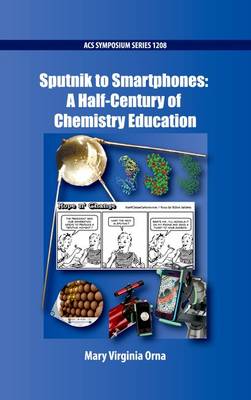
This book describes the profound changes that occurred in the teaching of chemistry in western countries in the years immediately following the Soviet Union's launch of Sputnik, the first artificial Earth satellite, in 1957. With substantial government and private funding, chemistry educators introduced new curricula, developed programs to enhance the knowledge and skills of chemistry teachers, conceived of new models for managing chemistry education, and
experimented with a plethora of materials for visualization of concepts and delivery of content. They also began to seriously study and apply findings from the behavioral sciences to the teaching and learning of chemistry. Now, many chemistry educators are contributing original research in the cognitive
sciences that relates to chemistry education.
While Sputnik seemed to signal the dawn of far-reaching effects that would take place in political, diplomatic, and strategic, as well as in educational spheres, the seeds of these changes were sown decades before, mainly through the insight and actions of one individual, Neil Gordon, who, virtually singlehandedly, launched the ACS Division of Chemical Education and the Journal of Chemical Education. These two institutions provided the impetus for the United States to eventually become the
undisputed leader in chemistry education worldwide.
This is Book 3 in the ACS Symposium Series Series. See all ACS Symposium Series books here.
See More Educational: Chemistry
No one has written a review for 'Sputnik to Smartphones: A Half-Century of Chemistry Education'
Why not be the first to share your opinion?