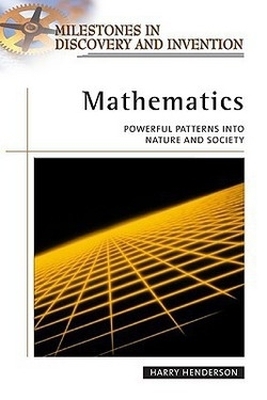
For most people, mathematics is an abstraction with little connection to the ""real"" universe. But some mathematicians have discovered relatively simple yet exceedingly powerful patterns that yield insight into aspects of natural and human behavior. ""Mathematics"" presents 10 essays that profile the minds behind such patterns, many of which have surfaced in recent popular culture. Meet Leonardo of Pisa, who worked with Fibonacci numbers and the ""Golden Section""; John von Neumann and John Nash, proponents of game theory; Edward Lorentz, who developed chaos theory; and Sid Meier, who has created award-winning computer games, such as Gettysburg and SimGolf, and five other mathematicians. Although the ideas explored here may produce complex results, they are inherently simple in concept, making them appealing, accessible vehicles for acquainting students with the human side of mathematics.
This is Book 1 in the Milestones in Discovery and Invention Series. See all Milestones in Discovery and Invention books here.
See More Educational: Mathematics & numeracy
No one has written a review for 'Mathematics'
Why not be the first to share your opinion?
Ray Spangenburg and Diane Kit Moser have been writing about science for more than 20 years. They are the authors of more than 50 books, including Facts On File's The History of Science set. Former journalists and editors, they have written for numerous magazines, including The Scientist, Science Digest, Space World, and Final Frontier.|||Harry Henderson is a
More about Harry Henderson

 The second book in a fabulous new magical, middle-grade series filled with adventure, wonder and wildness,