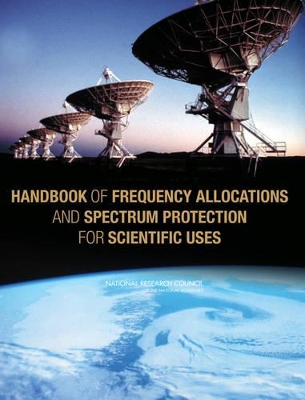
The electromagnetic spectrum is a vital part of our environment. Information encoded in the spectrum of radiation arriving at earth from the universe is the means by which we learn about its workings and origin. Radiation collected from the Earth's land, oceans, biosphere, and atmosphere provide us with much of the data needed to better understand this environment. Wise use of the spectrum is necessary if we are to continue these advances in scientific understanding. To help guide this effort, the NSF and NASA asked the NRC to develop a set of principles for fostering effective allocation and protection of spectral bands for scientific research. This handbook contains practical information in this connection including a description of regulatory bodies and issues, a discussion of the relevant scientific background, a list of science spectrum allocations in the United States, and an analysis of spectrum protection issues.
See More Educational: Physics
No one has written a review for 'Handbook of Frequency Allocations and Spectrum Protection for Scientific Uses'
Why not be the first to share your opinion?
Mathematical Sciences Education Board, National Research Council
More about National Research CouncilBy George C. Pimentel and Janice A. Coonrod
More about Division on Engineering and Physical SciencesCommittee on CMMP 2010, Solid State Sciences Committee, National Research Council
More about Board on Physics and AstronomyPanel on Frequency Allocations and Spectrum Protection for Scientific Uses, Committee on Radio Frequencies, National Research Council
More about Panel on Frequency Allocations and Spectrum Protection for Scientific Uses
 The second book in a fabulous new magical, middle-grade series filled with adventure, wonder and wildness,