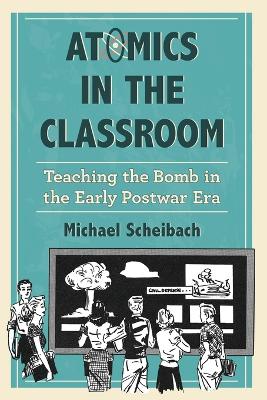
After the August 1945 atomic bombings of Hiroshima and Nagasaki and Japan's unconditional surrender, America's educational community quickly focused on preparing the younger generation for the atomic age. With the support of the federal government, elementary and secondary schools developed a curriculum known as "atomics," emphasizing the bomb's destructive power, peaceful applications of the atom and, most important, the need to control nuclear research. By the 1950s, with the Soviet Union's acquiring of the bomb, "atomics" expanded to include civil defense topics and activities, such as "duck and cover" drills. This book examines the broad curriculum--in social studies, science, mathematics, English, home economics and art--that emphasized atomics in American classrooms of the early postwar era. Lesson plans, class projects and activities, resource materials and extracurricular experiences are included.
No one has written a review for 'Atomics in the Classroom: Teaching the Bomb in the Early Postwar Era'
Why not be the first to share your opinion?
Editor and writer Michael Scheibach received his doctorate in American studies and has taught history, humanities, and writing as an adjunct professor for several years. He lives in Miami, Florida, USA.
More about Michael Scheibach