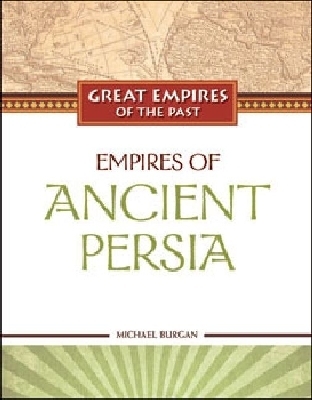
For almost 1,200 years, the Persians ruled a territory that stretched from the Black Sea into Central Asia, from India to Egypt and into the fringes of southern Europe. During that period from 550 BCE to 651 CE, the ancient Persians learned to cultivate crops such as wheat and barley and to domesticate animals; they also demonstrated their talents for architecture and art by building enormous palaces, such as at the site of Persepolis, and through intricate art painted on pottery. As their neighbors, particularly the Macedonian prince Alexander the Great, grew stronger, ancient Persia struggled to maintain its authority. Despite their eventual decline, the Persian empires had significant influence on the ancient world, including the idea of worshipping a single god. As the first monotheistic religion, Zoroastrianism would lay the foundation for the development of Christianity, Islam, and Judaism. ""Empires of Ancient Persia"" looks at the rise and fall of the Persian empires, the daily life of the people, and their influence on subsequent civilizations.
This is Book 6 in the Great Empires of the Past Series. See all Great Empires of the Past books here.
See More Educational: History
No one has written a review for 'Empires of Ancient Persia'
Why not be the first to share your opinion?
Michael Burgan has written numerous books for children and young adults during his nearly 20 years as a freelance writer. Many of his books have focused on U.S. history, geography, and the lives of world leaders. He has also written fiction and adapted classic novels. Michael has won several awards for his writing, and his graphic novel version of the classi
More about Michael Burgan
 The second book in a fabulous new magical, middle-grade series filled with adventure, wonder and wildness,