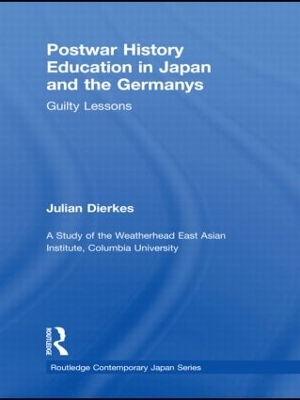
How did East and West Germany and Japan reconstitute national identity after World War II? Did all three experience parallel reactions to national trauma and reconstruction?History education shaped how these nations reconceived their national identities. Because the content of history education was controlled by different actors, history education materials framed national identity in very different ways. In Japan, where the curriculum was controlled by bureaucrats bent on maintaining their purported neutrality, materials focused on the empirical building blocks of history (who? where? what?) at the expense of discussions of historical responsibility. In East Germany, where party cadres controlled the curriculum, students were taught that World War II was a capitalist aberration. In (West) Germany, where teachers controlled the curriculum, students were taught the lessons of shame and then regeneration after historians turned away from grand national narratives. This book shows that constructions of national identity are not easily malleable on the basis of moral and political concerns only, but that they are subject to institutional constraints and opportunities. In an age when post-conflict reconstruction and reconciliation has become a major focus of international policies, the analysis offers important implications for the parallel revision of portrayals of national history and the institutional reconstruction of policy-making regimes.
This is Book 2 in the Routledge Contemporary Japan Series Series. See all Routledge Contemporary Japan Series books here.
See More Educational: History
No one has written a review for 'Postwar History Education in Japan and the Germanys: Guilty Lessons'
Why not be the first to share your opinion?
Julian Dierkes is an Associate Professor and the Keidanren Chair in Japanese Research at the University of British Columbia's Institute of Asian Research where he teaches Asia Pacific Policy Studies. Dr. Dierkes' current research focuses on a sociological analysis of supplementary education ("juku") in Japan.
More about Julian Dierkes