'Thought-provoking and entices the reader to take a discerning look at science.'
Claire Garven, MA Senior Lecturer at the University of the West of England, Bristol, UK.~An approach to planning and teaching primary science that gives children permission to question their own preconceptions. This enables teachers to encourage children to actively think and discuss what they see, and give reasons for their developing scientific ideas. Strongly recommended for teachers who want their children to learn to think scientifically.'
Jane Gibson, Senior Lecturer and Coordinator of primary science in ITE at the University of St Mark and St John (Marjon), UK
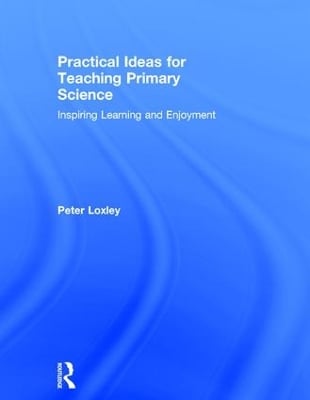
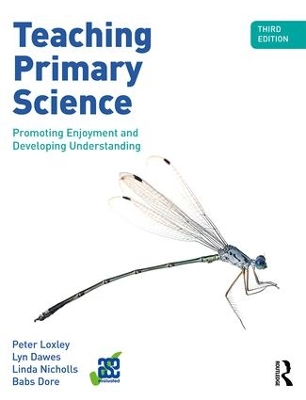
This second edition brings science subject knowledge and pedagogy together to support, inform and inspire those training to teach primary science.
Written in a clear and accessible way, the book provides comprehensive coverage of science themes. Ideas for teaching and examples from practice provide a basis for inspiring children to explore science and look at the world in new and intriguing ways.
Hallmark features
Ideas for practice exemplify how you can help children to use scientific knowledge and concepts to satisfy their curiosity about natural phenomena.
Something to think about scenarios help to extend and develop your own understanding of key ideas.
The companion website includes links to suggested reading and Teachers TV clips for your own development and for use in the classroom.
New to this edition
A new chapter called Views of Science Learning encourages the teacher to take a central role in helping children develop scientific attitudes, skills and conceptual understanding.
Learning Outside the Classroom is a new chapter that provides ideas and guidance that helps to develop childrenaEURO (TM)s scientific skills and knowledge, while also promoting positive attitudes to science.
New Global Dimensions sections offer starting points for discussion and research into how scientific ideas can be positively applied and can be used to evaluate the impact of human activity on the natural world.
Talk Skills and Science Discussion sections enable you to develop children's scientific knowledge and verbal reasoning skills.
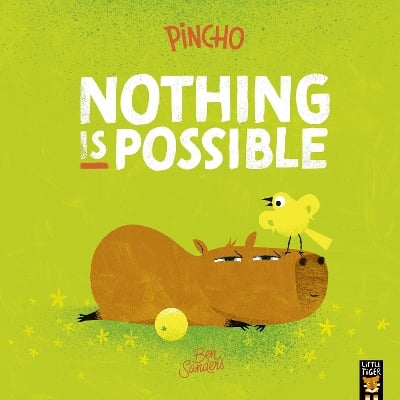
BOOK OF THE WEEK - Young readers will love this gorgeous picture book about a chilled capybara who just won't be rushed.
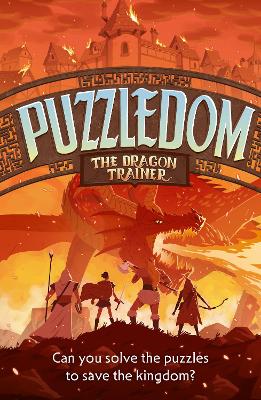
Can you solve the puzzles to save the Kingdom? Put your puzzle skills to the test with mazes, word games and codes to crack!
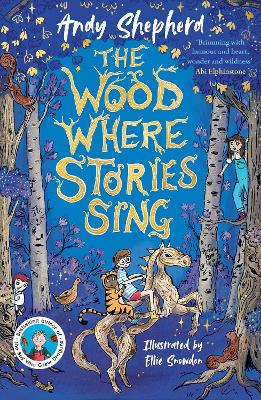
The second book in this popular series celebrating friendship, magic and fighting for what you believe in.
No one has written a review for 'Teaching Primary Science: Promoting Enjoyment and Developing Understanding'
Why not be the first to share your opinion?
The authors, who specialise in primary science and science education, worked together at the University of Northampton. Their main research interests and publications are concerned with promoting the value of social learning, more specifically the effective use of talk for learning and story-telling strategies.
More about Peter LoxleyLyn Dawes is a teacher and education consultant, specialising in Science and Talk for Learning. She is the author of a series of books dealing with classroom talk, notably Talking Points: Discussion Activities in the Primary Classroom (Routledge, 2012).
More about Lyn DawesThe authors, who specialise in primary science and science education, worked together at the University of Northampton. Their main research interests and publications are concerned with promoting the value of social learning, more specifically the effective use of talk for learning and story-telling strategies.
More about Linda NichollsThe authors, who specialise in primary science and science education, worked together at the University of Northampton. Their main research interests and publications are concerned with promoting the value of social learning, more specifically the effective use of talk for learning and story-telling strategies.
More about Babs Dore