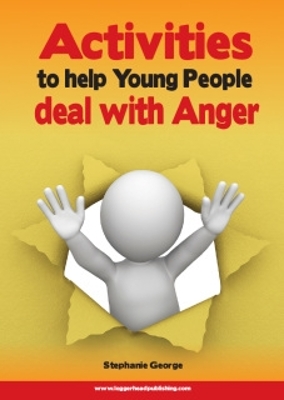
Activities to Help Young People Deal with Anger: Address issues relating to anger and conflict using a mentoring approach

by

Write a Review

These activities have a particular focus on developing skills for managing anger, conflict and relating to others. They provide specific, structured tasks that can be used during one-to-one mentoring intervention and for group work.The 20 activities include:

  • My Anger Triggers – For students to recognise the initial signs of anger and identify some ways of defusing the emotion of anger.
  • Anger Matrix – To give students the opportunity to map their approach to anger and visualise where they are going and where they would like to be.
  • Initial Self-Assessment: Relating to Others – To give students the opportunity to assess themselves in order to provide a baseline for measuring progress with a focus on relating to others and issues of conflict.
  • Student Reassessment and Evaluation – To give students the opportunity to reassess themselves in order to measure progress.
  • How I Feel When I am Angry – To give students the opportunity to reflect upon the physical responses to anger.
  • A Letter Home – For students to recognise how others may view their behaviour and reflect upon the impact this behaviour has upon others.
  • Ways of Coping – For students to generate ways of coping in moments of crisis.
  • Improving my Listening – The aim of this activity is to raise student awareness of listening skills and how to improve them.
  • Dilemmas 1 & 2 – To give students the opportunity to consider dilemma-based learning situations.
  • Conflict: What it is and How to Deal With it – To raise awareness of the skills students will need to enable them to mediate between students in conflict.
  • Read All About it: Making Headlines – Students are to consider the content of a story then think about how stereotypes can influence people’s actions and reactions.
  • Crime Scene Investigation – To give students the opportunity to act as investigators and look objectively at a given situation and come to their own conclusion, thereby encouraging independent thinking.
  • What Happens Next? (1 & 2) – These activities aim to help students to consider a set of circumstances and consequences.
  • Stop Seeing Red – To identify strategies for coping with highly charged emotional situations.
  • My Autobiography – To augment and support the idea that the students’ decisions have an impact upon their lives and their futures.
  • My Progress – For students to demonstrate that there is measurable progress in aspects of their learning.
  • Target Setting and Action Planning – To develop a set of SMART targets and create a plan of action.
  • Review: Target Setting and Action Planning – To review a set of targets and prepare a further plan of action.
Each activity includes full instructions and worksheets which can be photocopied from the A4 book or printed out from the FREE online resources.

Activities to Help Young People Deal with Anger: Address issues relating to anger and conflict using a mentoring approach Reviews | Toppsta

9781909380493

Share on

Videos

If you would like to provide a video review please sign up to our video panel.

Category

See More Educational material

Sign up to our newsletter for...

Free Book Giveaways, Recommendations & more

Be the first to write a Review


No one has written a review for 'Activities to Help Young People Deal with Anger: Address issues relating to anger and conflict using a mentoring approach'

Why not be the first to share your opinion?