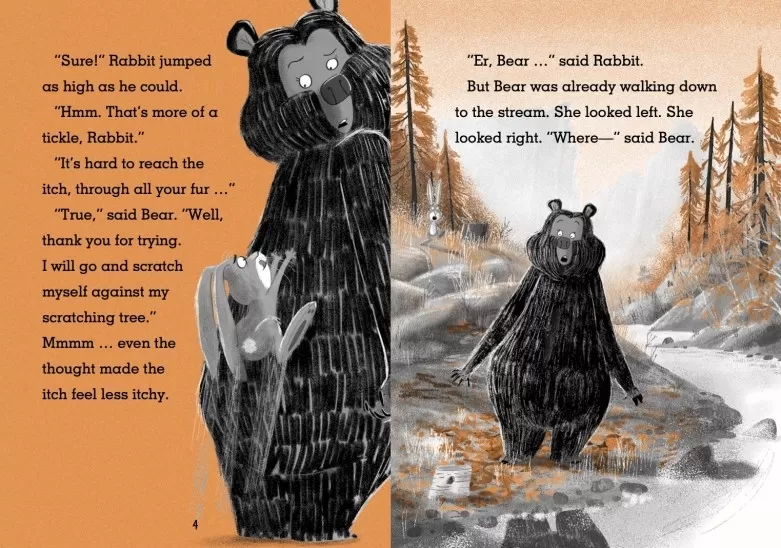
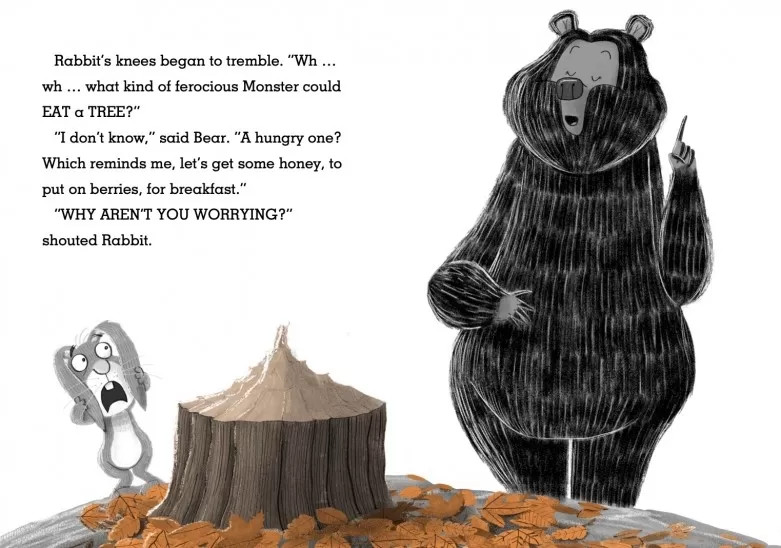
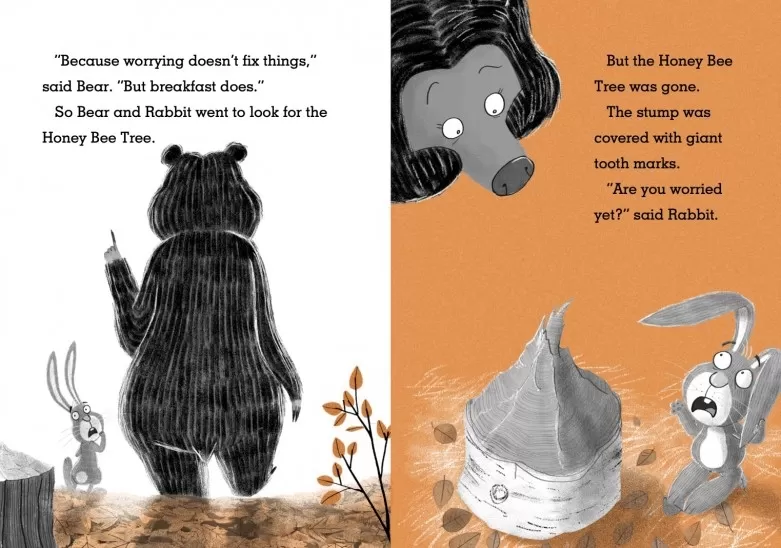
Sophie is such a huge part of the series’ success. The first book, Rabbit’s Bad Habits, emerged from a conversation with her, when she was about six. I was reading her a bedtime story, and it was a bit of a stinker. Boring! Nothing happened. No conflict. And so together we wrote a very different story. Rabbit & Bear don’t start off as friends, they have to work out how to be friends. And the Valley they live in isn’t perfect from the start – the different animals have to find ways to draw the best out of each other, and to channel their more difficult instincts somewhere safer. After all, if you give in to your worst instincts, and eat all your friends, you’re going to regret it. Sophie suggested adding a wolf to the first book, “because then he could chase the rabbit, and that would be exciting!” She had a far better grasp of story age 6 than some professional writers do.
Childhood isn’t taken nearly seriously enough in this culture. If things go wrong there, it’s incredibly hard to fix it later. And the lessons you learn as a kid will guide your behaviour for the rest of your life, so children’s books are incredibly important. Far more important than adult books, because they’re forming the minds of the next generation. They’re creating our future. Writing children’s books is deeply serious work, and I try to give it everything. And then hide the seriousness behind the best poo jokes ever!
I’m really glad there are sites like Toppsta, that help children and parents find the best books together. Where they can talk to each other, recommend things to each other.
I’ve written a lot of other things – novels, BBC radio plays, the ending to the computer game Minecraft – but the Rabbit & Bear books are probably the most personal and satisfying things I’ve ever written."